
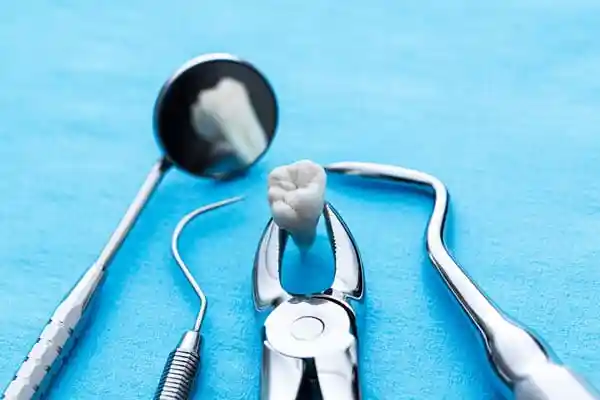
Tooth Extraction In Bellevue, WA
Tooth extraction is the forced removal of a tooth, using forceps, from the dental alveolus or the socket in the alveolar bone (alveolar bone is the bone with sockets surrounding the roots of the teeth), due to various reasons. Along with the removal of the tooth, a bone graft is placed so that the tooth can be replaced by a future implant. Bone graft also prevents future bone loss/defect in the area, which prevents weakening and loss of neighboring teeth.
It is an outpatient procedure performed by a dentist. Although all of us try our best to take utmost care of our teeth, sometimes teeth get diseased and unsalvageable. Every effort must be made to save the natural tooth; however, in some cases, the outcome is not favorable. The tooth must be extracted to prevent infection and damage.
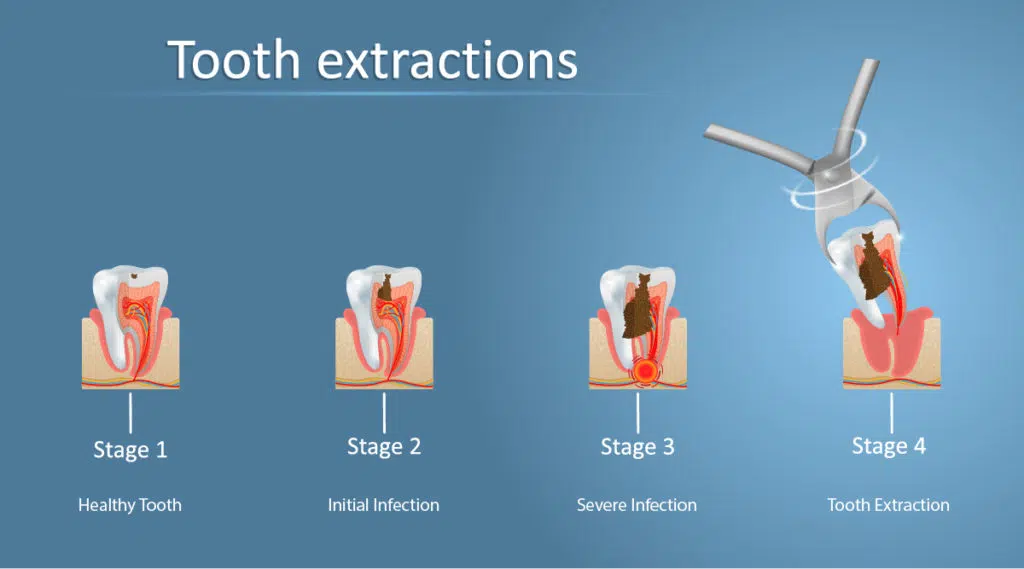
Why Or When Tooth Extraction Is Needed?
There are multiple reasons why you might want to have a tooth extracted. Most commonly tooth extraction procedures are carried out on teeth that have become diseased, non-restorable and extracting is the most appropriate solution to solve oral pain. Tooth extraction is one of the most important services that are offered by dental specialists. Following are the common causes for initiating tooth extraction:-
Tooth Decay
A very common cause for tooth extraction is tooth decay. A decaying tooth encourages the development of bacteria and other microorganisms that feed on the tooth. It causes bad breath, but this will not be a cause for concern like the agonizing pain that you will be experiencing. Also, the tooth must be extracted to prevent infection and damage to the surrounding tooth. It is important to act quickly since infection can spread to the gums, sinus and lymph nodes.
Broken Tooth
Although our teeth are very strong, sometimes teeth gets broken or damaged by physical injuries or sports accidents or biting into something hard (especially in case of tooth decay). The problem of a broken tooth can be minor or serious depending upon the tooth and the extent of the damage. However, in order to avoid further damage or severe complications, it is important to see the dentist at the earliest possible.
Crowded Teeth
Sometimes, teeth get crowded when they do not get enough space to fit in the jaw. The crowded teeth can make it hard to brush and floss well which can result in a build-up of tartar, plaque, and possible infection. If crowded teeth are causing tenderness or pain, then tooth extraction might be the appropriate solution.
Impacted Tooth
An impacted tooth is one that has either partially erupted or not erupted through the gums. Generally, it happens with the wisdom tooth but other teeth can be impacted too. The impacted teeth can cause crowding, harm roots of other adjacent teeth, or create difficulty in chewing or biting.
Wisdom teeth extraction
Wisdom teeth are often fully or partially impacted teeth, which means they do not have enough space to fully come out of the bone. Wisdom teeth also push against the adjoining molar teeth, causing crowding and bone loss around the adjacent teeth. Wisdom teeth are also challenging to keep clean since it’s hard to get toothbrush and floss to the wisdom teeth.
Emergency tooth extraction
Sometimes the tooth has a significant underlying infection leading to unbearable pain, and cannot be saved using root canal treatment. In these cases, the dentist may recommend extracting the tooth. After the extraction, a bone graft is performed to avoid losing the bone around the extracted teeth and prepare the area for a future dental implant or a dental bridge to place a natural-looking tooth.
How Is This Procedure Done?
Before extracting your tooth, the dentist will take the details of your full medical and dental history, along with a list of the medications that you take. It’s important to disclose if you take any blood thinners or are allergic to any medicines.
The doctor may prescribe some antibiotics that you may have to take prior to the extraction. An x-ray will be taken to determine the best way to extract the affected tooth.
When you undergo a tooth extraction procedure, your dentist will numb the area with a local anesthetic. You may also receive an anti-anxiety medication or an intravenous sedative. If the dental extraction involves an impacted tooth, the tooth may be broken into pieces before it is removed.
Pulling teeth fall into two basic categories: simple and surgical. Here’s what to expect from each:
Simple
When you undergo simple tooth extraction, you will receive local anesthesia, which numbs the area around your tooth, so you’ll feel only pressure, not pain, during the procedure. Also, some dental professionals administer anti-anxiety medication or use conscious sedation for simple cases of pulling teeth. The dentist then uses an instrument called an elevator to loosen the tooth and forceps to remove it.
Surgical
Surgical tooth extraction is an operation by an oral surgeon involving removal of teeth that are not visible in the mouth, because they have not come out of the bone or if it is broken tooth. Individuals with special medical conditions may receive general anesthesia when pulling teeth involving surgery. You may also receive prescription pain medication for use immediately after surgical teeth-pulling procedures.
How Long Does It Takes For Tooth Extractions To Heal?
A common after-effect of tooth extraction is bleeding, which is unpleasant. Our dentists offer a few tips to prevent bleeding from reoccurring after extraction. If the severe bleeding persists, the patient may schedule an appointment as soon as possible.
When healing a tooth extraction, you have to take into consideration all the things that could cause your healing time to be lengthened and more painful. So, what can you do to ensure you’re doing everything you should during the tooth extraction aftercare process?
Some of the best things you can do after having an extraction is to lie down and rest. Although it sounds like a vacation, it isn’t always the case. While some people breeze through an extraction, others need a bit more tender loving care.
Recovering from tooth extraction can take anywhere from a few days to a couple of weeks, but most people begin to feel better after about three days. The extraction affects everyone differently, but it is important to take it easy and let your mouth heal at its own pace after teeth extractions. Plan your diet in the following weeks around healthy, soft foods that won’t strain your mouth post-surgery.
Now, keep in mind that not everything on the list is going to make you happy, but following the aftercare directions will help you in the long run. Remember, it only takes a few days before you can get back to your regular routine if everything goes well.
Post Treatment Guidelines
It’s important to follow your dentists’ instructions during the healing time. You may experience sensations from the treated area but do not spit too much. Instead, drink a lot of water. After Wisdom tooth extraction, you may experience swelling on gums, so you may be asked to use an ice pack as per the direction of your dentist.
Depending on the size of the area, it normally takes a few days to recover after a tooth extraction. The following steps help ensure that your recovery goes smoothly.
- Apply an ice pack to your cheek directly after the procedure to reduce swelling. Use the ice pack for 10 minutes each time.
- After the dentist places the gauze pad over the affected area, bite down to help in the clot formation. Leave the gauze on for three to four hours, or until the pad is soaked with blood.
- Take any medications as prescribed.
- In case of pain, a dentist may prescribe a pain-killer which is available over the counter such as acetaminophen. Depending on the complexity of the procedure, a dentist may prescribe a stronger painkiller.
- Rest and relax for the first 24 hours. Do not jump immediately into your regular routine the following day. For a week or two after the procedure, do not indulge in any strenuous physical activities which might increase the pain and stress on your gums and may cause unnecessary bleeding.
- Continue with the daily cleaning of your mouth but do not brush, spit or use mouthwash for the first 24 hours after the procedure.
- Don’t use a straw for the first 24 hours.
Drink lots of water and avoid any alcoholic, caffeinated, carbonated or hot beverages in the first 24 hours.
How does treatment work:
- Doctor will examine your teeth and provide consultation
- If necessary, appropriate x-rays will be taken to understand teeth and bone structure near the tooth
- Treatment plan will be discussed along with the insurance coverage.
- Book an appointment or call us at to schedule a consultation with the doctor.
Call today to schedule a consultation! (425) 998-8109
Call today to schedule a consultation!
(425) 998-8109
frequently asked questions
Are there any side effects?
Minor temporary facial swelling is expected after the extraction. One of the most common side effects of a dental extraction is dry sockets, which results in exposing underlying bone and nerves at the site of tooth extraction. A dry socket gets formed when, at the site of tooth extraction, a blood clot fails to develop or gets dissolved before the wound heals. Dry sockets are generally caused due to lack of precautionary measures.
How long do tooth extractions take?
As every case is different, the amount of time required to remove a tooth can vary. Typically a routine extraction will take 20-40 minutes to complete, including the time taken for you to go numb and after the procedure for the dentist to check it has stopped bleeding.
Tooth extraction is not as quick as your routine checkup, but unless you are undergoing a more complex surgical extraction, you need not write the whole day off.
How painful are tooth extractions?
Tooth extraction is generally done after administering local anesthesia to minimize pain. If it is a single tooth that needs to be extracted, it may not be very painful. However, the presence of underlying infection, and inflammation, may cause post-operative pain.
Who is not eligible for tooth extraction?
You are not eligible for tooth extraction if you are:
- Suffering from cold and cough
- Take blood thinners ( the endodontist may ask you to stop taking the blood thinners for a couple of days prior to the procedure )
- Suffering from diabetes
- Suffering from autoimmune diseases
- Suffering from hypertension
- Suffering from infections and fever
What can I eat after tooth extractions?
Normal eating habits need to be curtailed, although only temporarily after a tooth extraction. You may feel anxious about trying to eat the things you usually love to eat – and with good reason; you can’t.
After tooth extraction, you can eat soft foods for 3-5 days. Examples: pudding, yogurt, ice cream, applesauce, oatmeal, cream of wheat, eggs, mashed potatoes, or macaroni and cheese. Let hot food cool to room temperature before eating.