
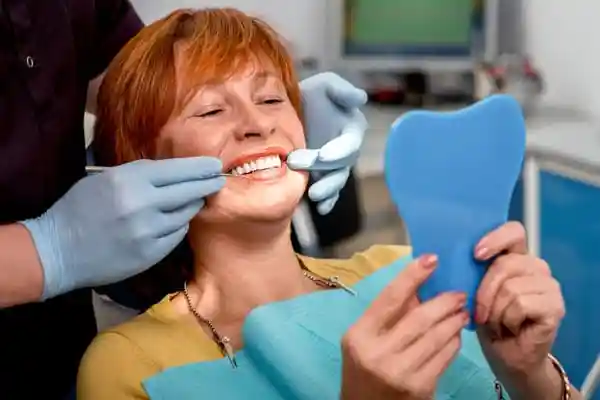
Dentures in Bellevue, WA
Tooth loss can affect more than just your smile — it can impact your ability to eat, speak, and feel confident in social situations. At Bellevue Azalea Dentistry, we offer custom dentures to help restore function and aesthetics. Whether you’re missing one tooth or an entire arch, dentures provide a comfortable and natural-looking solution to improve your quality of life.
What are Dentures?
Dentures are custom-made prosthetic appliances designed to replace missing teeth. They are typically made from acrylic, nylon, or metal and rest on your gums to restore the appearance and function of your natural teeth. Dentures may be full (replacing all teeth in an arch) or partial (replacing some missing teeth while retaining natural ones).
There are two main types:
- Removable Dentures: A more traditional option, they must be taken out at night. They include a gum-colored acrylic base and artificial teeth designed to resemble your natural smile.
- Implant-Supported Dentures: These are fixed in place using dental implants, offering added stability, comfort, and a natural feel.
Who Needs Dentures?
Dentures aren’t just for seniors. People of all ages can lose teeth due to decay, gum disease, injury, or other dental issues. Dentures may be recommended if:
- You have multiple missing teeth
- You have difficulty chewing or speaking
- Your facial appearance has changed due to tooth loss
Even if you’ve had teeth extracted recently, dentures can help restore oral function and aesthetics.
Benefits of Dentures
- Improved ability to chew and eat a variety of foods
- Enhanced facial appearance and support
- Better speech and confidence
- Custom-fitted for comfort and function
Dentures can even help prevent further oral health issues by supporting the jaw and adjacent teeth.
The Denture Procedure: What to Expect
Getting dentures involves a few appointments to ensure the best fit and function. Here’s how it works:
- Initial Dental Exam: Your dentist will evaluate your oral health, jawbone, and remaining teeth to determine the right type of denture.
- Impressions and Measurements: Impressions of your mouth are taken to create custom-fit dentures.
- Fitting and Adjustments: Your dentist will ensure the denture fits comfortably and make any necessary adjustments.
- Delivery: Once ready, your final dentures are placed, and you’ll receive care instructions.
In cases where extractions are necessary, an immediate denture may be provided to support healing while maintaining appearance.
Adjusting to New Dentures
It’s normal to need some time to adjust. Here are common challenges and tips for a smoother transition:
- Eating: Start with soft foods and chew slowly. Use both sides of your mouth to keep dentures stable.
- Speaking: You may notice changes in your speech at first. Practice reading aloud to adapt more quickly.
- Discomfort: Some irritation or increased saliva is normal during the initial days. These symptoms usually resolve with time and minor adjustments.
Caring for Your Dentures
Proper care will extend the life of your dentures and protect your oral health:
- Remove and rinse dentures after eating
- Brush them daily with a soft brush and denture cleaner
- Soak them overnight in a denture solution
- Clean your gums and any remaining teeth regularly
Avoid using harsh chemicals or hot water, which can warp the denture material.
Can I Repair My Own Dentures?
While denture repair kits may seem like a convenient option, DIY fixes can lead to improper fit, irritation, and even further damage. If your dentures break or feel uncomfortable, it’s best to schedule a professional repair. At Bellevue Azalea Dentistry, we can assess the damage and apply long-lasting repairs safely and effectively.
Common Causes of Denture Damage
- Accidental Drops: Dropping dentures, even once, can create cracks or weaken them over time, making them more prone to future breakage.
- Poor Fit: Dentures that don’t fit well can shift and apply uneven pressure, which may lead to stress fractures in the base.
- Isolated Teeth Stress: Single artificial teeth on a denture can snap off when excessive chewing force is applied, especially when eating hard foods.
- Broken Clasps: Repeatedly inserting or removing dentures can stress the metal clasps, causing them to weaken or break.
To minimize damage, handle your dentures gently and store them safely when not in use.
Potential Side Effects of Dentures
It’s common to experience a few minor side effects while adjusting to dentures:
- Taste Changes: You might notice a temporary reduction in taste sensation.
- Speech Difficulties: Speech patterns may change initially but usually return to normal with practice.
Sore Spots: Minor irritation or blisters can occur but typically subside as your mouth adapts.
What to Do If Your Dentures Break
If your dentures break, avoid fixing them yourself. Contact your dentist promptly. Here’s what to do while you wait:
- Gather All Pieces: Find and safely store any broken parts.
- Skip Household Glues: Temporary kits may help, but avoid non-dental adhesives.
- See Your Dentist: Bring all pieces for a proper repair or adjustment.
- Prevent Future Breakage: Handle dentures gently and store them properly. Regular dental visits help catch early wear or issues.
Final Thoughts
Dentures are a reliable, non-invasive solution for restoring your smile and function. Whether you’re considering full or partial dentures, or you need a repair, Bellevue Azalea Dentistry is here to guide you every step of the way.
Ready to restore your smile? Call us today at 425-998-8109 to schedule a consultation with Dr. Uparika Sharma. Let’s find the right denture solution for your needs and help you get back to smiling with confidence.
Call today to schedule a consultation! (425) 998-8109
Call today to schedule a consultation!
(425) 998-8109
frequently asked question
Who is not eligible for dentures?
Certain people are not a good fit for dentures, due to factors such as oral health, bone structure, and age. Hence the following people are best to avoid dentures:
- Individuals with irregular bone formations should best avoid dentures. These irregularities make retention of dentures very difficult.
- Individuals who can have an allergic reaction to the materials used in dentures should also avoid them. These materials include certain metals, plastic, and acrylic.
- Individuals who are prone to tooth decay and have a history of bad oral health have higher chances of developing infections after denture treatment.
What are the post-treatment guidelines?
It is normal to have a feeling of fullness and excessive salivation initially with dentures. Becoming familiar with your new dentures will take time. Do not expect results for several weeks. During the adaptation period, you will likely experience sore spots, difficulty eating, difficulty speaking, cheek/lip biting and frustration.
Remove dentures from the mouth every night and store in a glass of water—this allows your gums to heal and recover. You may use freshening tablets if you desire, but do not use bleach or toothpaste. Massage your gums with a soft, wet towel to keep them firm and resistant to denture irritation.
Clean with a denture brush and mild hand soap, this is the best way to control odor and stain. Clean over a towel on the side of the bed or a full sink of water—this will prevent breakage if they are accidentally dropped.
Also, taking great care of your dentures gives you a permanent missing teeth solution, regular cleaning and brushing with the right mouthwash is advised.
What is the recovery time?
Staying hydrated is vital for the recovery process. It’s best to avoid drinking through a straw as the suction could potentially open one of the incisions. You should can’t be alarmed if the gums bleed a little the first few days after the extraction. When this happens, you can bite down lightly on some sterile gauze. Once the bleeding has stopped, you can then rinse your mouth clean with lukewarm saltwater.
How much do dentures cost?
The cost of getting dentures varies with the type and the material used to make the denture. Looking them up and understanding the cost and the whole process is advised.
Costs differ considerably depending on which procedure and which dentures you and your dentist choose. Keep in mind, too, that the quality of dentures can vary. You will want the best dentures you can afford, which means finding a reputable dentist whom you trust.
For a full set of dentures – remember, this is just a ballpark figure – you can expect to pay anywhere from $1,000 to $4,000 for a complete set. Premium dentures can run closer to $8,000, and you can expect partial dentures to range from $500 to $1,500.
Along with the cost of the dentures, you will have to pay for any necessary extractions which can run $75 to $450 a tooth.
How much do implant-supported dentures cost?
There are several elements that affect the overall cost of implant-supported dentures. The final price of treatment will depend on the health of your teeth, gums, and jaw as well as the quality of the restoration you receive. The size of your restoration is also a factor, as a full denture requires more implant posts than a partial denture.
In addition, the experience of your dentist and the area in which you live can alter how much your implant-supported dentures cost. A complete set of custom dentures can cost between $1,500 and $4,000 when fabricated from porcelain. However, keep in mind that this price excludes any preparatory procedures, implant placement, and sedation.
How much do dentures costs without insurance?
Again it all depends. There are so many different insurance policies out there that it’s difficult to tell you how much will be covered. The best advice is, before you do anything, check with your insurance company and find out exactly how much will be covered. In case you need supplemental insurance, make sure the dentist or prosthodontist you choose takes your insurance.
The cost range does not include fees associated with possible oral surgery or tooth extraction. Depending on the type of dental insurance you have, insurance companies may offer a 15 percent reimbursement or up to 50 percent absorption of the total procedure costs.
How long does it take to get used to dentures?
Just like any other prosthesis, it all depends on your individual circumstances, your health provider’s expertise, the type of treatment, and your follow-up care. But, you should certainly expect your dentures to last at least five years, with some dentists projecting more like ten. Your dentist may recommend changing them out after five or seven years, but, again, it all depends on your mouth and your specific dentures. No matter what, it’s important to see your dentist regularly for early signs of wear.
What are dentures made of?
In the past, the artificial teeth that make-up dentures were made out of porcelain or plastic, but more modern dentures are generally made out of a hard resin. The materials used to make denture teeth are known to be more fragile than natural teeth and can easily chip or crack if dropped or otherwise uncared for. This material also wears down much quicker than natural teeth and thus must be replaced with a new set of dentures every five years or so.
The supporting structure of dentures that holds the artificial teeth in place and resembles the natural gum line is often made out of a similar resin used for the teeth, or a more flexible polymer material that fits snugly on the natural gum line.